
Introduction
The review of the Snowy Water Inquiry Outcomes Implementation Deed (the Deed) is a crucial opportunity to restore the health of the upper Murrumbidgee and Snowy Rivers, and other montane rivers that are affected by the Snowy Hydro Scheme. This is our chance to restore the health of these important rivers.
The Commonwealth Government has established an Independent Review Panel to review the 2002 Deed, which governs how water is managed and how much water is released for the environment. The Panel has published a consultation report and are inviting submissions by 13 February 2026 here: https://www.dcceew.gov.au/water/policy/programs/water-reform/improving-health-upper-murrumbidgee
Please consider sending in a submission to speak up for the upper Murrumbidgee River that needs our help.
Here is some information to help you write a submission to the Independent Review Panel.
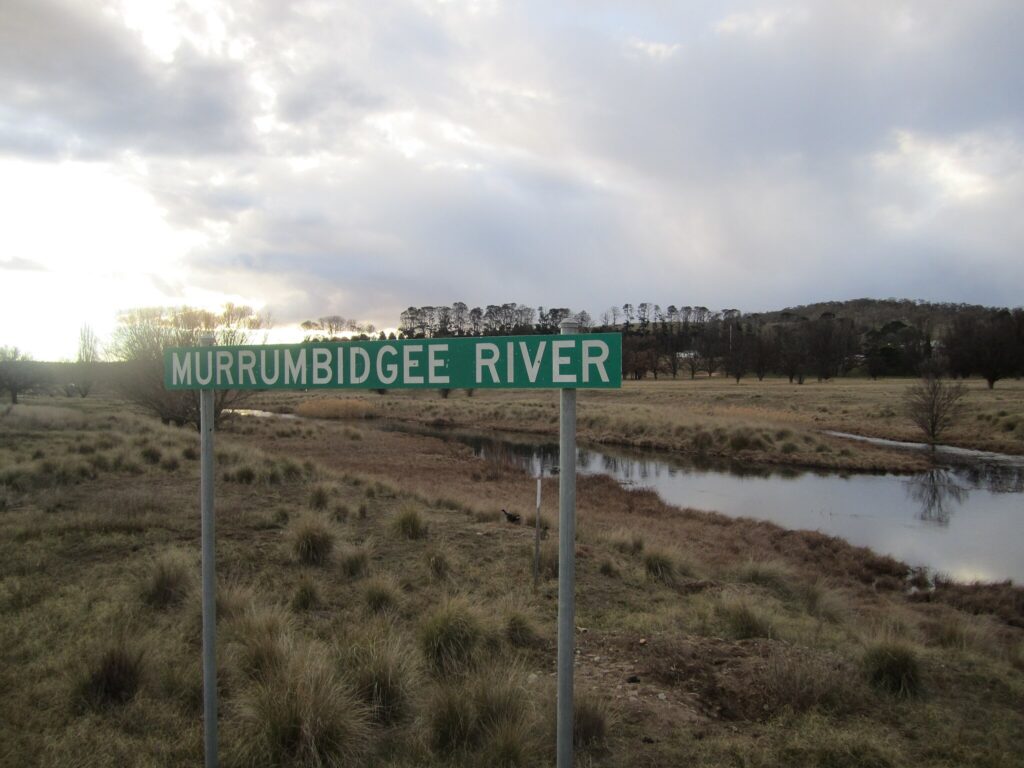
Image: https://commons.wikimedia.org/wiki/File:Murrumbidgee_River_at_Bolaro,_NSW,_Australia.jpg
So, what’s the problem?
The upper Murrumbidgee River is in crisis, with river health continuing to decline. This is largely because this section of river is being starved of water by the Snowy Hydro scheme, which diverts on average 93% of annual flows at the headwaters of the Murrumbidgee River at Tantangara Dam, and some years up to 99%.
River health, and endangered species such as the Macquarie Perch and Murray Cod, will only recover once more water flows from Tantangara Dam and once flows are better able to mimic natural seasonal variation.
Current governance is ineffective. The Deed is overly complex, lacks transparency and does not set meaningful targets or benchmarks for ecological health. Reporting is complex and does not include all relevant information, there is a lack of accountability for not meeting targets, and no inbuilt review mechanism for the Deed. An overhaul of management is long overdue.
If you have limited time, below are our suggestions on the top ten recommendations for the Review Panel.
- Set science-based, enforceable environmental release targets
The current target of releasing 27 GL/yr, just 9% of natural flows from Tantangara Dam isn’t enough, isn’t enforceable and hasn’t been delivered in most years since 2005. The river needs more water, and we need real targets with consequences if they aren’t met.
A target of at least 87 GL/yr should be set to deliver around 30% of natural flow levels. This would allow base flows to be maintained during hotter months as well as delivering a high flow event in spring large enough to scour sediment from the riverbed to restore habitat.
- Increase the outflow capacity from Tantangara Dam
The outflow capacity of the Tantangara Dam outlet is restricting the ability to deliver high flow pulses, especially events of sufficient duration to scour the riverbed of sediment to restore habitat e.g. to expose the rocky riverbeds required by some fish species (McGuire and Pittock, 2025). The Deed specified an outlet flow capacity of at least 2 GL per day. The maximum daily volume released from Tantangara since 2011 is 1.5 GL. Daily releases in excess of 2 GL are required to restore the health of the Upper Murrumbidgee River. An expert panel established by the NSW Government in 1997 to evaluate environmental flow requirements recommended that flows of 4-6 GL/day were required to mimic a spring high flow event (Pendlebury et al. 1997).
To restore river health the outflow capacity of Tantangara Dam needs to be updated to enable delivery of 6 GL/day.
- Protect environmental releases from Tantangara to Burrinjuck reservoirs
Environmental releases are not protected once released from Tantangara Dam, unless the NSW Government orders a temporary water pumping restriction. This means that, if a restriction is not in place, the water can be extracted by downstream farmers, negating the environmental benefits of the release.
All environmental releases must be protected from Tantangara to Burrinjuck reservoirs.
- Allow more flexibility in delivery of flows
Under the Deed the volume of environmental water available each is linked to water yields (catchment inflows) in the previous water year. This has the negative environmental impact of smoothing regulated river flows, for example, it means that more water is available in a dry year due to high inflows in a preceding wet year. Australia’s river ecology is driven by boom and bust water flows. Magnifying these fluctuations is an important way to restore the health of regulated Australian rivers, e.g. to trigger fish migration for breeding.
The Deed should be changed to allow flexible and more ecologically beneficial environmental releases. Beneficial flexibility could include i) carryover of water entitlements between years, ii) synchronizing releases with those of naturally flowing rivers, iii) enabling ecologically opportunistic within-year changes, and iv) allowing variability in daily release rates.
- Respect the rights and knowledge of Traditional Owners and provide opportunities to participate in water management decisions
New governance arrangements need to place Indigenous rights and knowledge at the centre of river management. This should be done in close partnership with Traditional Owners along this stretch of river. Future governance needs to provide opportunities for Traditional Owners to participate in decision-making and could fund Indigenous river ranger programs, if support by Traditional Owners.
- Establish ecological performance measures against which progress will be measured
Environmental objectives and performance measures need to be set for the upper Murrumbidgee River and publicly reported on. This is crucial for tracking progress and improving accountability. The objectives and performance measures should be based on the latest science.
- Review and replace the entire Deed and include the ACT Government as a party to the new governance arrangements
The SWIOID needs to be revised in its entirety, including Snowy River provisions, not just the sections relating to the Murrumbidgee River. The Deed has not been effective and has serious omissions and failings (Bender et al. 2022, McGuire and Pittock 2025). These omissions include failures to apply national water management principles (e.g. by requiring users like Snowy Hydro to contribute to the cost of management), no consideration of climate change or the rights of Traditional Owners, as well as a failure to define and deliver environmental outcomes. These omissions and failings must be systematically addressed and new governance arrangements put in place.
The ACT Government has significant responsibilities for the Murrumbidgee River and incurs costs managing the damage caused by excessively low flows. The critical human water needs of the Tharwa community in the ACT depend on the Murrumbidgee River. Under national water policy, the ACT Government should have but is not afforded priority access to Murrumbidgee River water to meet critical human needs and sustain the river environment. For these reasons, the ACT Government deserves the same legal certainty and ability to influence decisions as the other state parties to a revised Deed.
- Remove compensation clauses to Snowy Hydro for changes
The current Deed requires Snowy Hydro to be compensated for any loss of electricity generating capacity that results from increased environmental releases. More recently, Snowy Hydro has asked the NSW Government for compensation for the most basic new measures to mitigate its environmental impact, such as employing a staff member to oversee more variable environmental releases. This compensation requirement is not fair or reasonable. The Snowy Hydro as a government business enterprise should not be compensated for any costs incurred in implementing new cultural and environmental measures.
- Reconsider the current exemption of the Deed and Snowy Water Licence from the provisions of the Water Act
Extending the Commonwealth Water Act’s provisions to the Snowy and montane rivers would ensure that the same sustainability principles and measures that apply in the rest of the Murray-Darling Basin are extended to the upper Murrumbidgee and Snowy rivers. The Stream Flow Indicator sites and Environmental Water Requirements used for freshwater ecosystem conservation in the Basin should be extended to the upper Murrumbidgee and Snowy rivers.
- Consider expanding the role of the Inspector-General of Water Compliance to cover the montane rivers
Rigorous and independent oversight is needed on this stretch of river. The mandates of the Commonwealth Inspector-General of Water Compliance and NSW Natural Resources Access Regulator should be extended to cover the upper Murrumbidgee and Snowy rivers, with requirements that they periodically (e.g. every 5 years) review implementation of the Basin Plan, revised Deed and Snowy Water Licence by Snowy Hydro and WaterNSW. This would greatly improve integrity and transparency through independent oversight.
References
BENDER, I., PITTOCK, J. & ROBERTS, J. 2022. Snowy River environmental flows post-2002: lessons to be learnt. Marine and Freshwater Research, 73, 454-468. https://doi.org/10.1071/MF21209
MCGUIRE, A. & PITTOCK, J. 2025. Environmental flows in the upper Murrumbidgee River: evaluating flow delivery and governance to inform future environmental flow agreements. Marine & Freshwater Research, 76. https://doi.org/10.1071/MF24286
PENDLEBURY, P., ERSKINE, W., OLLEY, J., MARCHANT, R., BROWN, P. 1997. Expert Panel Environmental Flow Assessment of the Upper Murrumbidgee River. Prepared for the NSW Environmental Protection Authority. (NSW EPA: Sydney, NSW, Australia)